Friday, January 3, 2014

SINULOG FESTIVAL 2014 At The Queen City of the South.

Sinulog Festival is the highly anticipated fiesta in the queen City of the South. For many years it has been considered as the grandest festival in the Philippines celebrated every third Sunday of January in honor to the Child Jesus-Sto. NiƱo. Sinulog means a graceful dance ritual accompanied by a drum which historically remembers the Cebuano and the Filipino pagan past and the acceptance of Christianity in the country. It is already in history that once Sinulog mentioned it’s all about Cebu and when Cebu is the topic it’s a house of Sinulog. No other festival in the Philippines that may be compared to Sinulog in terms of purpose, number of devotes and even the way how it is celebrated. Here is a tentative line-up of activities of Sinulog Festival this year:

December 30, 2013 Sinulog Fun Run. January 9, 2014 Opening Salvo; Installation of Hermano and Hermana Mayores, Walk with Jesus. January 10, 2014 Sinulog 2014 Kick-off: Street Party bands, Launching parade, Sinulog Idol. January 11, 2014 Sinulog sa Kabataan sa Lalawigan, Cultural Show. January 12, 2014 Cultural Show, Grand Finals of Sinulog Chorale competition. January 13, 2014 Sinulog street Party & cultural show. January 16, 2014 welcome party of Balik Cebu (Balikbayan na Cebuanos) January 17, 2014 Traslacion, Walk with Mary, Sinulog festival Queen Competition. January 18, 2014 Grand Fluvial Procession, Street Party, Reenactment of Baptism of queen Juana. January 19, 2014: Pontifical Mass, Sinulog grand parade. January 20, 2014 awarding ceremonies.  January 24, 2014 Hubo mass ritual. January 25, 2013 Photo exhibit/competition.

It is expected that as usual, millions of devotees and tourists will occupy the busy street of Cebu and anticipated as well that ports and airport are busy for this month. Over the years Cebu that tagged as Queen City of the South is the most loved place in the Philippines by tourists both local and foreign. It is because of some historical places, significant items and brands and the most beautiful white sand beaches that are all available in Cebu.

Common places and foods that you shouldn't miss while in Cebu:

The Historical Cross of Magellan.
One of the famous spot that tourists never forget to visit while in Cebu is the historical and legendary Magellan’s Cross.
This is a Christian cross planted by the Portuguese and Spanish explorers headed by Ferdinand Magellan when they arrived in the Country on April 1521. Though this is no longer the original cross but still many people venerate this for the fact that the original form is encases in this Tindalo wood cross.

The cross is now placed inside a kiosk closer to the Basilica Minore del Santo Nino and is just in front of Cebu City Hall at Magallanes Street, (Magallanes street was named after Ferdinand Magellan. Magallanes is Magellan’s Spanish name) Cebu City proper.


Taoist Temple
Taoist Temple is situated in Beverly hills, Lahug Cebu City. This is the center for worship of Taoism religion in Cebu built in 1972 by the Chinese community in Cebu. This is open for both worshipers and non worshippers so many tourists are visiting this place day by day. This is just 20-30 minutes away from the Metro Cebu but sometimes due to heavy traffic it would take you lesser than hour to get there. Transportation is not so frequent because the situation of the temple is in very private subdivision to better to take a ride in taxi or in habal-habal if without private vehicle.


 Marian Temple                 
This Marian Temple in Lindogon, Sibonga, Cebu or most commonly known as Simala Shrine is another famous center of catholic worship in Cebu. Thousands of devotees coming in daily offering prayers and petitions to loving mother because this is believed to be miraculous. It was believed that the image of mother Mary is shedding tears of blood – a phenomenon that lacks of scientific or any artificial validation but draws more people attention over the years.
You won’t believe that this Shrine appear to be so spacious but during Sundays this has almost no more space due to volumes of devotees coming in to venerate the miraculous image of Mama Mary. It would take some efforts in going there. From Cebu City you need a bus ride of almost 2 hours from South Bus Terminal and from the highway another 15-20 minutes in habal-habal or tricycle ride. Though you might be experiencing some risks and stressful travel but all these things will be reconciled by the serenity of the place and the distinctive behavior and accommodation of the Marian monks and of some loyal and religious conservatives. 

When it comes to foods and delicacies Cebu is also number one and well known place that offers a variety of local foods that are tastier and likeable. Number one in the list is the Lechon de Cebu which is proven to be the most delicious variety of lechon in the county so far. This is the number one fiesta serving of Cebuano’s and even in some simple occasion like birthdays, reunions, group outings and gatherings.   
There are many restaurant and fast food chain the serve lechon for meals. This is also available in pasalubong   package because many tourist love to bring this home when they visit Cebu. Truly, you will never enjoy your stay in Cebu if you won’t taste Lechon de Cebu of its kind. Prices per kilo are ranging from 380-400. 

Another famous local food in Cebu is Bibingka or locally called “Bingka” in Visaya. This is one of the favorite local delicacies for snacks and picnic foods. This is locally made from rice flour with a very unique preparation and baking procedure. As compared to other wheat or flour-made snacks, bibingka always win our taste because of its uniqueness in ingredients which are also locally available and without any other extra added formulation or food preservatives.


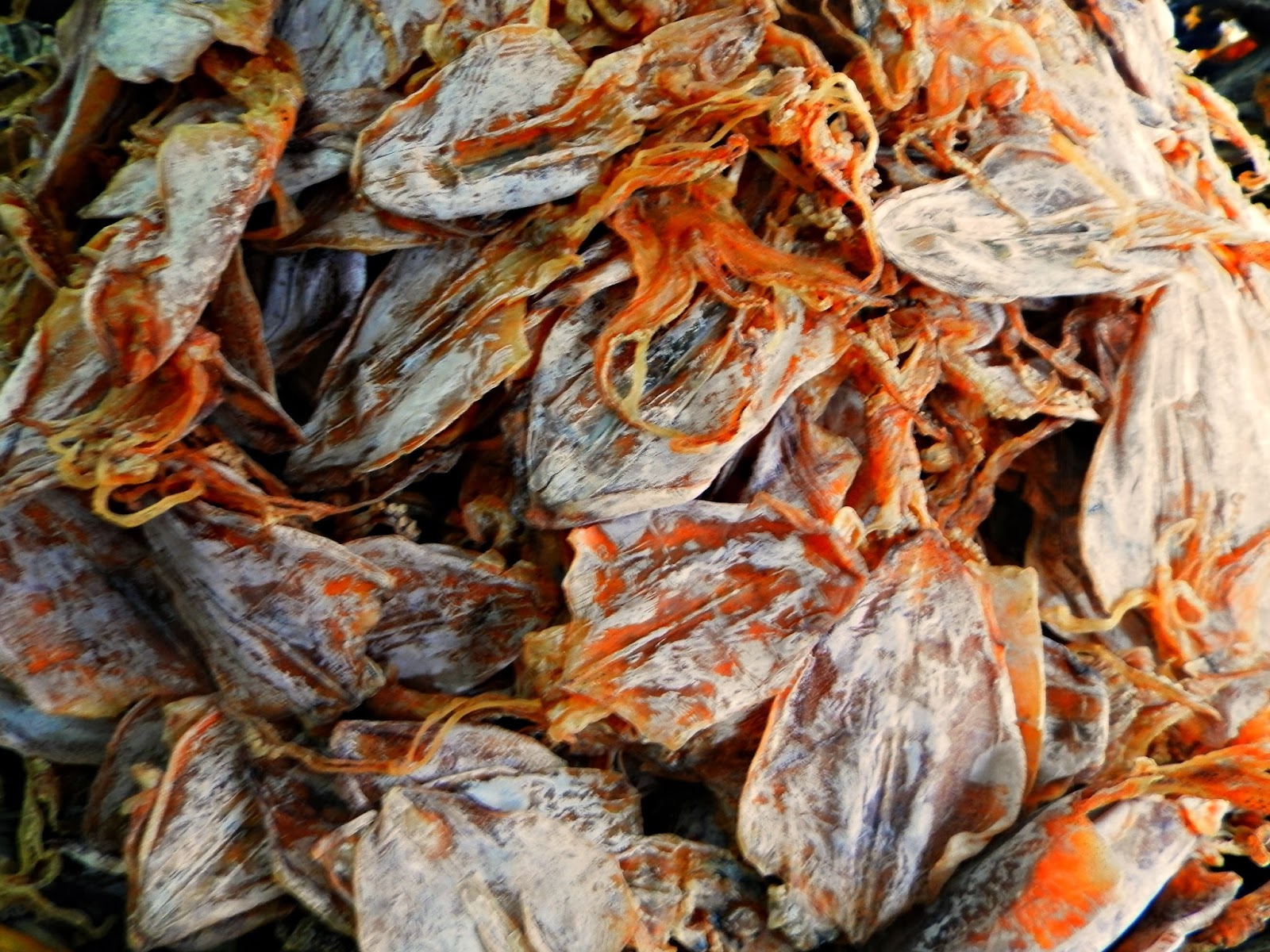
Some of the best Pasalubong that were known to be the Cebu identity are the dried Sea Foods or the Danggit and Pusit to be particular. These are common in all local markets and even in malls in Cebu.

Monday, September 16, 2013

Pinoy Classic, Roadside Bibingka de Cebu

Bibingka or locally called “Bingka” in Visayas is one of the favorite local delicacies for snacks and picnic foods. This is locally made from rice flour with a very unique preparation and baking procedure. As compared to other wheat or flour-made snacks, bibingka always win our taste because of its uniqueness in ingredients which are also locally available and without any other extra added formulation or food preservatives.


Bibingka is traditionally baked in an improvised oven heated with a coal or by coconut husks which are both available in the locality. In terms of ingredients bibingka has a very unique component. This is made from fresh ingredients like coconut milk squeezed from freshly grated coco flakes, white rice flour, some leavening agent, “tuba” or coconut wine for better and sweeter taste instead of yeast or baking soda, butter or margarine as fillings, and freshly picked banana leaves where bingka has to be formed into holders. Once ingredients already prepared and placed into holders packed by babana leaves, it has to be baked for about 10-15 minutes to improvised oven before it could finally serve as ready to eat and deliciously baked bibingka. 

This improvised oven is a very important one in baking for Bibingka. Simple as this appear but it can accommodate pieces of deliciously ready-to-bake Bibingka that would surely satisfy hunger and craving for naturally delicious and one of a kind pinoy classic Bibingka. This improvised oven (according to bingka maker) can accommodate 15-20 pieces of ready-to-bake bibingka. This has to be heated with coconut husks or shells on top and below while bingka placed into its holders inside for 10-15 minutes baking. Many have greeted that one of the ingredients that makes the Bibingka de Cebu very delicious is the “Tuba” or coconut wine. This is best used instead of using other forms of yeast or baking powder and to avoid putting too much sugar to sweeten its taste.
This is sold into a price of P5 each commonly on the streets, south-road ways, snacks food Shoppe and at Pasalubong center anywhere in Cebu.

Wednesday, August 21, 2013

DOTS OF TRAVEL 2013: Pinoy Taste Kalderetang Kambing


One of the best Pinoy dish commonly serves for occasions such as fiestas, birthdays, and other parties. This is also a perfect pulutan or appetizer. Unlike to other kaldereta or (Caldereta), The Kalderetang Kambing requires some extra effort in preparation.  This is because the goat meat is gamey and it needs to eliminate the odor and gamey flavor by marinating it in vinegar, salt and ground pepper mixture for a minimum of an hour before cooking to best experience its delicious taste.
To really satisfy the delicious goat meat it has to be sure that the meat should be from a Chevon or the adult goat because it is believed that adult goat meat is so tastier than of the young ones. Goat meat is believed to be fewer calories, less fat and cholesterol than of any other meat. This is perhaps why kalderetang kambing is loved by many.
Kalderetang kambing is commonly find in Filipino restaurant or even more available in local food shop or “turo-turo”.


Saturday, June 22, 2013

TRAVEL NOTES 2013: THE CULTURAL HERITAGE OF BOLJOON, CEBU

I've been staying in Cebu for a couple of years and fortunately explored some historical and important places but not yet in the South. I remember more than a year ago, my good friend Traveling Morion keep on inviting me for a sidetrip to South Cebu but with some-urgent interest I missed the opportunity. Thanks anyway for some great persons who favored my plan of seeing the faith-centered, quiet place of Boljoon, Cebu.  

Boljoon (pronounced as “bull-who-on”) is a fifth class municipality in the province of Cebu with around 15,027 population (data as of 2010). It is a coastal municipality with vast natural resources and historic places and figures. It is considered as Pilgrim Town during the colonial times and became the center of faith and religious activities in Southern Cebu. Boljoon name was taken from its origin “Bolho” which means ‘Spring of Water’ because the place is also the source of spring water in South Cebu. Among the Municipalities in southern part of Sugbu, now Cebu, Boljoon has been famous because of some available facts and figures of history.


RUINS OF THE ANCIENT CHURCH:
Boljoon Church is one of the oldest Church in Visayas with significant religious artifacts and the historic figure that narrates the history of the place. Boljoon Church or in its old famous pilgrim name as “Church of Patrocinio de Maria” was built in 1599 during the Spanish era.  This has been very famous for this is the only pilgrim church in Southern Cebu to which during fiesta celebration, many devotees are coming in to venerate the image of the virgin enshrined in the altar who believed that posses miraculous powers. This church is generally made of corral stone and a clay roof tiles for its roof. This church is founded by the Augustinian fathers during colonial times. On its left part is a century museum that houses the relic and images of the vintage religious artifacts.  


ESCUELA CATHOLICA:  


Escuela Catholica is the oldest full solid wooden structure considered as one of the heritage of Boljoon. It was built during the Spanish occupation. It serves as a house for children who will receive a holy communion and a venue for catholic education of the native people in South Cebu. It also houses the church orientation activities and Spanish lessons. Children’s were taught how to read and write using the Cartilla or the old academic command in this edifice. This has a two concrete symbolic staircase; one for the boys and the other one for the girl’s communicants.  It is positioned at the left side of the oldest church of Boljoon and belongs to the towns’ pride and historic figure that narrates the Boljoon’s past.


EL GRAN BALUARTE DE BOLJOON

El Gran Baluarte is the biggest Spanish watchtower in the Philippines built in 1808 by Augustinian priest Rev. Fr. Julian Bermejo.  This watchtower served as the command center in the defense of the Visayan sea during the Moro raids in South Cebu.  This is the main fortress of the vast church complex’s fortification. Under this watch tower is a prison cell with some preserved mural paintings of prisoners. This is one of the wonders of history that can be seen in the foreground of the oldest church in Boljoon, Cebu.

HOW TO GET THERE:
Since Boljoon is in southernmost part of Cebu, the only means from Cebu City is by Bus. It would take about 2 hours travel from Cebu City thru public buses with route going toLiloan, Dalaguete, Oslob. Fare is about 150-180 pesos only. 

Friday, June 21, 2013

REMAINS OF TRAVEL 2013: El Gran Baluarte de Boljoon

El Gran Baluarte is the biggest Spanish watchtower in the Philippines built in 1808 by Augustinian priest Rev. Fr. Julian Bermejo.  This watchtower served as the command center in the defense of the Visayan sea during the Moro raids in South Cebu.  This is the main fortress of the vast church complex’s fortification. Under this watch tower is a prison cell with some preserved mural paintings of prisoners. This is one of the wonders of history that can be seen in the foreground of the oldest church in Boljoon, Cebu.

Friday, June 7, 2013

TRAVEL NOTES 2013: Discovering history and pride of San Pablo City, Lungsod ng Pitong Lawa

It is a fact that every place has its own history and every story of humble beginnings has a significant relation to present time. San Pablo City, Laguna has never been an interest for me in travel and leisure but since it’s a birthplace of the world where I am connected, as time goes along, I learned to love and find some answers to my wondering mind how the place was built and meant to be as it is right now.  Even before, my blogger close friend Traveling Morion, always approached me to include San Pablo in our travel list but I just keep that invitation passing to my attention. Until one Saturday Morning, when our office organized a historical tour within the City, I took the opportunity to include myself into the list of participants. Thanks for the Hijos de San Pablo! I was able to gather additional inputs to my travel notes for San Pablo City, a birthplace of CARD-MRI – a well known Social Development Institution that caters beneficial services for Filipino poor and being the world class leader MFI.
San Pablo City is a first class City in the Southern part of Laguna Province and considered as one of the oldest City in the Country. Historically, San Pablo was named “Sampaloc” because of the presence of beautiful Sampaloc lake just within the City vicinity. It is also known as “City of Seven Lake” because of the presence of 7 beautiful and abundant lakes. But as time goes on, Sampaloc name was changed to San Pablo a named taken from their Patron Saint.
San Pablo city is rich in history and culture. It is one of the favorite places of tourist goers in the country because of its strategic location which is just 2 hours drive from Metro Manila. Of all its humble beginnings as a place, only some available infrastructure and location that makes the history remembered. However these places contributed much on the culture and practices of the people of San Pablo City as the aura of their significant past. 

Remnants of the Past:
The Seven lakes:
The Sampalok, Pandin, Palkpakin, Bunot, Yambo, Muhikap and Calibato are the seven lakes of San Pablo City. These are the wonders of San Pablo a best place to delight yourself with native foods, natural ambiance and with a stress-free ride in a locally known Balsa while eating along the lake. I tried to visit all these lakes mentioned but situation only permits me to see the two famous; Sampalok and Pandin lake. 
Sampalok Lake/Tilapia Monument:
Sampalok lake is just within the City at the ground area of the City Hall. This lake, aside from giving the people a good variety of lake foods, it also serves as a park place where you can relax, spending your free time and do some exercise while breathing the fresh atmosphere of the area. The commonly known freshwater fish, Tilapia is the major product of this lake. Accordingly, Tilapia was first cultured in this lake over the years. The first Tilapia siblings was just a donation from the courtesy of a certain couple named Agahan-Pulgar. They brought the tilapia Fingerlings all the way from Hawai and decided to keep it live in their own pool however, later on they decided to let the fingerlings stay at Samapaloc lake as their habitat. From then, more and more harvest of Tilapia was enjoyed by the San Pablohanon

 Pandin Lake:
Another lake was also caught my attention and this time its quite far from the City thus need to go there for 20 minutes travel and 15 minutes walk. However the efforts of walking from drop-off road to Pandin lake is reconcilable when I reach the place and see the beauty of Pandin lake.  There I took up my lunch while in a Balsa touring from lake end-to-end as the local tourist guides managing the ride. The food viand served as our lunch were; a delicious grilled Tilapia, creatively made native Fern Salad, small shrimp cooked in a coconut milk plus the eggplant salad and the delicious-locally made leche plan and Ube. All these servings are manageable without using fork and spoon to really satisfy the taste of these native foods with a combination of rice packed in Banana leaves that will surely please your hunger and complete your lake cruise tour. 


The historic Cathedral
It is said to be that it took for the church builders 35 long years before this church, which is now a cathedral, has been finally came into being. This parish church is made up of bricks which sufficiently strong and spacious. This was founded by Augustinian Fathers but later when the Augustinian Missionaries and the Archbishop of Manila had been into certain church conflict the Church administration was turned over to Franciscan Friars. Since 1910, San Pablo City was part of the Archdiocese of Lipa but on 1967 it became an independent Roman Catholic Diocese until at present.
This City Hall has been built long years ago during the American regime. This was not the original government edifice of San Pablo for the first one is situated just in front of the church.  
These are just some of historical pride of San Pablo. Place, culture and history are a testimony of how the place has got its name and how it was developed. History is important of course but now- a-days what is more important is how to manage the local resources and keeping it growing and beneficial to all.

Thursday, May 30, 2013

TRAVEL NOTES 2013: The Secluded beauty of Tulang Island

Every time I visit Camotes Island I am always introduce to a new interesting attraction and this time it’s an islet that really caught my wondering mind.
Tulang Island is an islet along with the four big islands situated at the Eastern part of Cebu and West of Leyte Province. Tulang or (Tuang Diot-small Island) as commonly known to many is part of barangay Esperanza in the Municipality of San Francisco. It is a fantastic and secluded island ever that offers blue clear water with powdery white sand beach and a community of hospitable people. This is a best place when you want to escape from busy schedule and feel solitude while enjoying the beauty of nature and taste the invigorating beach atmosphere.

From the mainland of San Francisco municipality it would take only 5-10 minutes boat ride before reaching the place with very least boat fare of P10.


Related Posts Plugin for WordPress, Blogger... Related Posts Plugin for WordPress, Blogger...